Monday, September 16, 2019

Tỳ-kheo Bodhi Phát Biểu Trước Liên Hợp Quốc về Biến Đổi Khí Hậu


Tỳ-kheo Bodhi Phát Biểu Trước Liên Hợp Quốc về Biến Đổi Khí Hậu
Cao Huy Hóa dịch
Lời người dịch:
Trong mùa Phật đản Phật lịch 2563, nước ta long trọng tổ chức Đại lễ Vesak Liên Hợp Quốc 2019 tại Tam Chúc, Hà Nam, thì sau đó, cũng để kỷ niệm đại lễ này, tại diễn đàn Liên Hợp Quốc, vị học giả Tỳ-kheo Bodhi đọc bài diễn văn về tình trạng khẩn cấp do biến đổi khí hậu trên toàn cầu. Tại đây, nhà sư đã phân tích cặn kẽ nguyên nhân và đề nghị giải pháp toàn diện với trí tuệ của một sứ giả Như Lai.
                                                                          ***
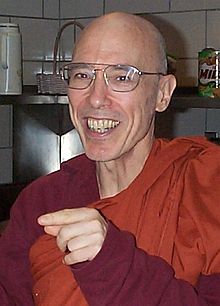


Tỳ-kheo Bodhi, thế danh là Jeffrey Block, sinh năm 1944 tại Brooklyn, New York, tu theo truyền thống Theravada. Từ những năm ở lứa tuổi đôi mươi, Phật gíáo đã có sức thu hút mãnh liệt đối với Jeff rey.
Năm 1972, sau khi hoàn tất học vị Tiến sĩ Triết học tại Đại học Claremont Graduate School, người thanh niên này du hành đến Sri Lanka và thọ giới Sa-di. Năm 1973, sư thọ giới Tỳ-kheo với giới sư là ngài Ananda Maitreya, một vị sư học giả Phật giáo thuộc hàng lãnh đạo của Sri Lanka thời bấy giờ.
Năm 1984 Tỳ-kheo Bodhi được bổ nhiệm làm Chủ biên Hội Xuất bản Kinh sách Phật giáo ở Kandy, Sri Lanka, sau đó Sư được bầu làm chủ tịch hội này. Sư đã tu họchành đạo tại Sri Lanka hơn 20 năm. Năm 2002, Tỳ-kheo Bodhi trở về New York. Hiện nay ngài cư ngụ tại tu viện Chuang Yen (Trang Nghiêm tự), New York và giảng dạy Phật pháp tại đây và tại Bodhi Monastery ở New Jersey. Ngài cũng là Chủ tịch Ngân quỹ Ấn Thuận (Yin Shun Foundation) và Chủ tịch sáng lập Quỹ Phật giáo Cứu trợ Toàn cầu (Buddhist Global Relief) đặt trụ sở tại New York, nhằm mục đích cứu trợ nạn đói và nạn thất học toàn cầu.
Tỳ-kheo Bodhi là người dịch các bộ kinh ra tiếng Anh, và cũng là tác giả, chủ biên nhiều tác phẩm Phật học rất có giá trị.                                 
Dưới đây là bài diễn văn của Tỳ-kheo Bodhi.
Đây là một vinh dự lớn đối với tôi khi tôi có thể nói vài lời trong dịp lễ kỷ niệm Vesak Liên Hợp Quốc. Đức Phật thường được ca ngợi là một vị Thầy của hòa bình, khoan dung, thiện chítừ bi. Và trong khi Ngài tất nhiên minh họa và giảng dạy những phẩm chất này, những điều đó không bao giờ cạn trong toàn bộ nội dung thông điệp của Ngài. Đức Phật không chỉ là một nhà hiền triết nhân từ, mà Ngài đứng trên tất cả, và Ngài còn là nhà phân tích sắc sảo về điều kiện con người, có lẽ là vô song trong lịch sử tư tưởng của nhân loại.
Ngài là một lương y chẩn đoán cấp tính về tình trạng con người và là một nhà phẫu thuật đã rứt ra những dấu chấm đau khổ lên trái tim con người. Kinh Phật mô tả Ngài là mula dasavi, người đã nhìn thấy nguồn gốc sâu xaẩn khuất nhất của khổ đau. Ngài đã tóm tắt những tâm bệnh trong hai tật xấu là ngu dốt và tham dục, hoặc ba vết nhơ là tham, sân, si. Các bài giảng của Đức Phật về nguồn gốc nhân quả của đau khổ chủ yếu trong khuôn khổ của cuộc tìm kiếm giải thoát cá nhân. Chúng cho thấy những phiền não tinh thần làm hỏng cuộc sống cá nhân của chúng ta như thế nào. Chúng ta có thể tự giải phóng phiền não ngay từ hôm nay. Tuy nhiên, khi thế giới đã được tích hợp vào một trật tự toàn cầu phụ thuộc lẫn nhau, chúng ta phải xem xét quá trình nhân quả này hoạt động ở cấp độ cộng đồng và sau đó dựa trên cuộc nghiên cứu này, chúng ta phải xác định loại thay đổi mà chúng ta phải thực hiện trong xã hội, trong các thể chế chính trị, trong các chính sách toàn cầu để tránh những nghịch cảnhchúng ta phải đối mặt như một cộng đồng quốc tế. Chúng ta có thể gọi đây là một ứng dụng toàn cầu của sati sampajañña (chánh niệmtrí huệ), của tỉnh thứchiểu biết rõ ràng về tất cả những nguy hiểm chúng ta gặp phải ngày nay, ghê gớm nhất, toàn diện nhất và đe dọa nhất, đó là điều thường được gọi là biến đổi khí hậu, nhưng có lẽ có thể được gọi chính xác hơn là mất ổn định khí hậu hoặc rối loạn khí hậu.
Đây là một điều kiện rất gay go trong đó khí hậu ngày càng trở nên thất thường, không thể đoán trước và có tính hủy hoại. Hầu như mỗi tuần, một báo cáo mới được đưa ra về các ngưỡng mới bị vượt qua, các số liệu mới xuất hiện cho thấy mức độ nhanh chóng rơi vào hỗn loạn khí hậu. Tuy nhiên, các báo cáo này hầu như không nhận được bất kỳ sự chú ý trên các phương tiện truyền thông chính thống. Đó là triệu chứng về cách chúng ta có thể bịt kín từ chính mình, những hiểm họa thực sự nằm ngay trước chúng ta. Có một bài giảng nổi tiếng của Đức Phật, gọi là bài pháp về Lửa, bắt đầu với tuyên bố rằng mọi thứ đang bùng cháy. Mọi thứ đang ở trên lửa. Một kinh Đại thừa, kinh Pháp hoa, xây dựng trên chủ đề này với câu chuyện ngụ ngôn về một ngôi nhà đang cháy. Trong nhà, những đứa trẻ tiếp tục chơi với đồ chơi của chúng, không biết gì về ngọn lửa bao quanh ở mọi phía. Ngôi nhà trong câu chuyện ngụ ngôn này tượng trưng cho thế giới và những đứa trẻ dại dột tượng trưng cho con người, cho chính chúng ta, khi chúng ta đắm chìm trong những mối quan tâm hàng ngày, trong khi chúng ta bỏ qua ngọn lửa của tuổi già và cái chết thiêu rụi ngôi nhà của chúng ta.
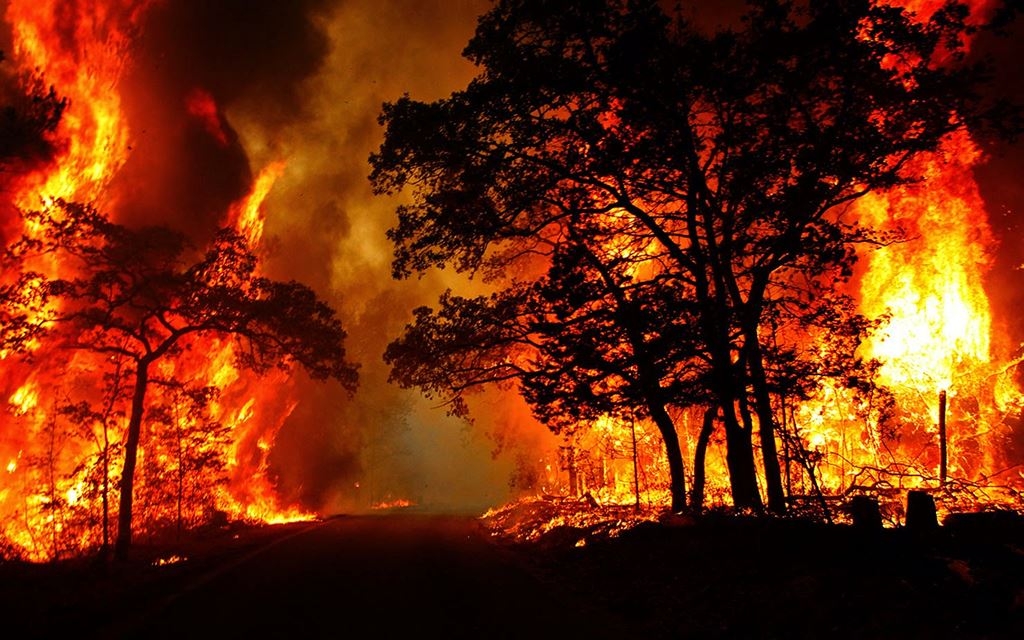


Ngày nay, hình ảnh thế giới như một ngôi nhà đang cháy đang trở thành sự thật theo đúng nghĩa đen. Mỗi năm, các dấu hiệu của khí hậu bất ổn trở nên nghiêm trọng hơn, tàn phá hơn và nguy hiểm hơn. Tất cả những cơn bão và lốc xoáy mạnh mẽ, sóng biển dâng cao làm xói mòn bờ biển, lũ lụt dữ dội, cháy rừng khủng khiếp, tất cả đó là triệu chứng của khí hậu bị rối loạn, nhưng hậu quả tầm xa thậm chí còn nguy hiểm hơn. Trong tương lai, chúng ta có thể thấy trước rằng toàn bộ các khu vực trên hành tinh có thể trở nên không phù hợp với điều kiện sống của con người, dẫn đến hàng triệu cái chết thương tâm và di cư hàng loạt trên quy mô chưa từng thấy. Nguồn cung cấp thực phẩm trên thế giới có thể bị giảm mạnh, làm tăng nhanh số người chết đói.
Chính nền tảng của cuộc sống văn minh có thể sụp đổ, khiến nhiều quốc gia rơi vào tình trạng man rợ. Chúng ta biết những gì nằm đằng sau sự biến đổi khí hậu. Các nguyên nhân đã được xác định với độ chính xác khoa học. Đó là sự lệ thuộc vào nhiên liệu hóa thạch, những sự thực hiện giải phóng đất đai không khôn ngoan, các mô hình công nghiệp của nông nghiệp và một nền kinh tế hưng thịnh trên các chu kỳ chóng mặt của sản xuất và tiêu thụ không ngừng. Chẩn đoán của Đức Phật đưa chúng ta đi một bước sâu hơn và chỉ ra rằng những gì nằm dưới cuộc khủng hoảng khí hậu ở mức độ căn bản nhất, đó chính là những méo mó của tâm con người. Đó là sự tương tác của thèm muốn và ngu dốt, của tham lam và ảo tưởng. Nhiều thập niên trước những năm 1980, các tập đoàn nhiên liệu hóa thạch biết rằng việc đốt các sản phẩm của họ sẽ thay đổi khí hậu, nhưng họ che giấu bằng chứng khoa học và làm người ta hoài nghi về khoa học. Sự tham lam lợi nhuận chiếm ưu thế hơn sự tỉnh táo lành mạnh. Các nguyên tắc thành công của công ty chiến thắng trách nhiệm xã hội. Chính vì tâm si mê khiến chúng ta trôi theo một cách thỏa chí trên những lối mòn đã định sẵn của cuộc sống thay vì vươn lên thực hiện những hành động cần thiết. Và cứ thế, chính sự si mê hoặc ngu dốt khiến chúng ta phải nghĩ rằng trong việc này, một số người có thể thắng thế trong khi các hệ thống địa vật lý Trái đất sụp đổ.
Nếu chúng ta cứ rút lui vào sự phủ nhận trách nhiệm, cứ trôi dạt, tự mãn, chúng ta sẽ đạt đến một mốc thời gian để đến đó chúng ta phải thất vọng vì tình hình đã quá muộn. Nếu chúng ta muốn tránh điểm cuối đó, chúng ta phải hành động hiệu quả và hành động không chậm trễ. Trong một bài kinh, hay bài pháp, Đức Phật so sánh các đệ tử của mình với bốn loại ngựa, khác nhau về cách chúng phản ứng với vị trí roi của người chủ ngựa. Con ngựa tốt nhất phục tùng chủ ngay khi nhìn thấy cái bóng của roi. Con ngựa ngu nhất phải nhận một cú quất mạnh trước khi nó phục tùng. Nhiều thập niên trước, chúng ta đã thấy bóng của roi, những báo cáo khoa học về biến đổi khí hậu sắp xảy ra. Bây giờ chúng ta đang nhận những cú đánh sắc bén hơn, và để tránh những cú đánh tàn bạo nhất trong tương lai, chúng ta phải hành động một cách can đảm với nhận thức rõ ràng về những thay đổi cần thiết để tránh cuộc khủng hoảng này.
Nhất định chúng ta cần những thay đổi trong các hệ thống cộng đồng và cách sản sinh năng lượng trong các phương thức vận chuyển, v.v. Nhưng Đức Phật muốn nói rằng chúng ta cũng cần những thay đổi bên trong, thay đổi về giá trị và cách sống của chúng ta. Và hơn hết, trong các loại suy nghĩ, là các trạng thái tâm ẩn dưới cuộc khủng hoảng khí hậu leo thang. Trên tất cả, chúng ta phải quay lưng lại một hệ thống xã hội được thúc đẩy bởi lòng tham, bởi sự tìm kiếm lợi nhuận vô hạn, bởi sự cạnh tranh, bóc lột và bạo lực chống lại người khác và thế giới tự nhiên, bởi các hệ thống xã hội cho phép một số ít thịnh vượng trong khi hàng triệu, thậm chí hàng tỷ người, sống trên bờ vực sinh tồn. Thay vào đó, chúng ta cần hình dung các hệ thống tập thể mới của hội nhập toàn cầu ưu tiên hợp tác và cộng tác, sống hòa hợp với nhau và hòa hợp với tự nhiên, các hệ thống cho phép mọi người cùng phát triển về kinh tế, xã hội và tinh thần.
Đức Phật đã xuất hiện trong thế giới này vì lòng bi mẫn, nhằm đem đến lợi ích tốt đẹp cho loài người. Ngày nay chúng ta có ý tưởng rõ ràng về những nguy hiểm cộng đồng mà chúng ta đang phải đối mặt và chúng ta có thể thấy trên đường chân trời một tia hy vọng cho một tương lai được chia sẻ tốt hơn. Bây giờ chúng ta phải đi trên con đường đưa chúng ta tới tương lai mà chúng ta hiện đang hy vọng. Chúng ta biết phương hướng phải di chuyển. Bây giờ, chúng ta phải bắt đầu di chuyển trước khi quá muộn. Cảm ơn quý vị rất nhiều!
Nguồn: Watch Ven. Bhikkhu Bodhi deliver UN speech on climate change emergency (Video). Ghi lại bởi Rod Meade Sperry. Tạp chí Lion‘s Roar, 1/8/2019.
Tỳ Kheo Bodhi | Văn Hóa Phật Giáo Số 328 ngày 1-9-2019 |Thư Viện Hoa Sen nhập lưu 9-15-2019

Source:


Saturday, September 14, 2019

Homeless in the US

Homeless in US: A deepening crisis on the streets of America
By Hugo Bachega BBC News, Portland, Oregon
  • 8 October 2018
They seem to be almost everywhere, in places old and new, no age spared. Sleeping on cardboard or bare ground, the homeless come together under bridges and trees, their belongings in plastic bags symbolising lives on the move.
Many have arrived on the streets just recently, victims of the same prosperity that has transformed cities across the US West Coast. As officials struggle to respond to this growing crisis, some say things are likely to get worse.
……….
Australian academic Philip Alston, the UN special rapporteur on extreme poverty and human rights, travelled across the US for two weeks last December in a mission that included visits to Los Angeles and San Francisco. It resulted in a scathing report in which he said the American dream was, for many, rapidly becoming the American illusion - the Trump administration strongly criticised his findings.
The future, he warned in an interview, did not look promising. "The federal government's policies under this administration have been to cut back, as much as possible, on various housing benefits and I think the worst is probably yet to come."
Other rich countries have faced rising homelessness, too, as the most vulnerable feel the burden of austerity policies, rising costs and unemployment. But in most parts of Europe, for example, there was still a "robust welfare safety net", Mr Alston said, to help those at risk. "In essence, if you're in Europe, you get access to necessary health care, psychological, physical rehabilitation... That contrasts dramatically with the US."

Friday, September 13, 2019

Godfather Music


The Godfather Music BEST VERSION !!!

Published on Nov 24, 2011
**********
Others:
https://www.youtube.com/watch?v=zbSMCyJkUmI

The Godfather - Love Theme HQ - Nino Rota
Published on Aug 21, 2012

The Godfather – Orchestral Suite. - The Danish National Symphony Orchestra (Live)
Published on Jan 26, 2018
The Godfather - Immigrant theme
Published on Jun 10, 2009

The Godfather Waltz - Henry Mancini Orchestra
Published on Dec 25, 2011

Nino Rota - Speak Softly Love (The Godfather Theme) John Williams Version

Published on Jun 16, 2011

A Dream

                                             
A Dream

You are sitting next to me
at an old picnic table of dark wood
under the foliage of sky-soaring oak trees.
Far away in the meadow
are shadows of familiar faces
that seem to ignore our presence.

You are moving closer to me,
your scraggly arms reaching out
trying to embrace the elusive girl --
so elusive that an inch apart
appears like thousands of miles.

The shadows of familiar faces
turn and suddenly rush toward us;
and before they settle down
at the old picnic table of dark wood,
you and I are there no more.

The gentle morning rays
silently sneak into the room, waking me up.
I am lying still in bed, searching
my eyes wide open,
you are no where to find.

Stretching ahead, lengthwise till darkness
are the daily chores of a dragging life.

September 11-September 12, 2019

Saturday, September 7, 2019

How do we measure language fluency?

How do we measure language fluency?

There are many ways of categorising someone’s linguistic skills, but the concept of fluency is hard to define.
Mayor Pete Buttigieg’s youth, military record, and marital status may distinguish him from the other 2020 US Presidential Election candidates, but it’s his rumoured proficiency in seven languages that really has people talking.
This seemingly magical feat is especially impressive in predominantly monolingual countries like the United States and the United Kingdom (where, respectively, roughly 80% and 62% of the population speaks only English). But where such enviable talent creates an aura of mystique, it also inevitably arouses curiosity. When former US Senator Claire McCaskill asked Buttigieg to comment on his language-speaking ability in a 14 February instalment of MSNBC’s Morning Joe, he replied: “it depends what you mean by speak!” and added that he can “still kind of read a newspaper in Norwegian… but only slowly” and that he has gotten “rusty” in his Arabic and Dari. That shows humility, but not so much that Buttigieg and his camp definitively dismiss the polyglot rumours.
This is not to deride Mayor Buttigieg. His perceived fluency interests me because I’m a former language teacher – having taught English for 11 years in Japan and Italy – and I am also a Cambridge English exam speaking examiner; a role which requires me to dissect variables in candidates’ second language production such as pronunciation, discourse management, and grammatical range. Buttigieg is clearly fascinated by languages, willing to learn, and is brave enough to practice with native speakers on television – qualities that would have made him the star of my classroom. But – like so many of my ex-students who expected to go from “beginner” to “native” proficiency in two months – Buttigieg may have underestimated what it means to “speak” a language.
I can relate all too well to overestimating one’s own abilities. A “heritage speaker” of Italian, I’d been living in Italy for two years when I overheard a receptionist refer me to me as “that foreigner who doesn’t speak Italian”. I was confused, then gutted. That one casual sentence launched a journey that resulted in my being forced to acknowledge that while I had grown up speaking Italian at home and was fluent, I was not by any means proficient.
What does the word “fluent” actually mean? In lay circles, this term has come to equal "native-level proficient", with no grey area between the bumbling beginner and the mellifluous master. An outsider overhearing a conversation in a foreign language only hears a fog of sounds, thus perceiving anyone who can cobble together a sentence as “fluent”.
But Daniel Morgan, head of learning development at the Shenker Institutes of English – a popular chain of English schools in Italy – says that fluency actually refers to how “smoothly” and “efficiently” a second language (L2) speaker can speak on “a range of topics in real time”. While fluency may denote a degree of proficiency, it does not automatically imply accuracy – the ability to produce grammatically correct sentences – nor does it imply grammatical range.
How important are accuracy and grammatical range? That depends on the speaker’s needs. If they simply wish to converse in social settings, their focus may be solely on achieving fluency, but if the L2 is required for business or academia, accuracy and range are crucial as communications full of errors may be seen as unprofessional.
These errors can include literal word-for-word translation from their native language (“I go in Spain”), and language switch (“I want eat ringo”). Bungled verb tenses, prepositions, plurals, and articles are a natural, even essential, part of the learning process.
You might also enjoy:
Many learners, however, fall into the trap of assuming that because they are understood, their speech is “perfect”. And it isn’t only the speaker who glosses over mistakes; in the Handbook of Second Language Assessment, Nivja de Jong – senior lecturer at the Leiden University Centre for Linguistics – argues that grammatical errors usually won’t prevent comprehension on the part of the listener, who is automatically able to “edit out” mistakes. In English, a sentence like “I have 17 years” is incorrect, yet one nonetheless understands that the speaker wants to say that he is 17 years old. Furthermore, friends and teachers tend to encourage L2 learners rather than discourage them, which may also contribute to inflated self-assessment.
I think of the popular memes comparing how we envision a story or scene in our head, to the way we tell it or paint it. Those first crucial years of learning a language, you may be thinking in glorious brush strokes but speaking in scribbles.
So when can someone say they “speak” a language? That’s the million-dollar question. Can someone consider themselves a Spanish speaker if they’re conversational but often can’t understand native speakers because they “talk too fast”? If they use only two verb tenses and every sentence contains mistakes?
The answer may be less “yes/no” and more “how well?”
Luckily, scales for measuring spoken fluency and overall proficiency exist. “Fluency is an abstract concept, so we assign observable variables,” explains Daniel Morgan. Two of the most reliable factors are “speech rate” and “utterance length”. Speech rate can be defined as how much (effective) language you’re producing over time, for example how many syllables per minute. Utterance length is, as an average, how much you can produce between disfluencies (e.g. a pause or hesitation). You could look at accuracy as being subsumed into fluency, in terms of grammatical accuracy, lexical choice, pronunciation, and precision.”
De Jong describes the unconscious process any speaker goes through before speaking: conceptualising what to say, formulating how to say it, and, finally, articulating the appropriate sounds. All of this takes place in roughly six syllables per second. A speaker of a second language who needs to convert their thoughts into an unfamiliar language faces an even greater challenge in meeting these strict time constraints. They must also often overcome inhibition and pronunciation challenges. Accuracy may still be lacking at this stage, but make no mistake – achieving L2 fluency is a colossal feat.
The Council of Europe’s Common European Framework of References (CEFR) for Languages groups language learners into concrete proficiency levels, where fluency and accuracy are just two of many examined criteria. The CEFR – available in 40 languages – divides proficiency into six “can do” levels – A1, A2, B1, B2, C1, and C2. A corresponds to “Basic” levels, B to “Independent”, and C to “Proficient.” Observable skills include:
A1: Capabilities range include basic introductions and answering questions about personal details provided the listener speaks slowly and is willing to cooperate.
A2: Can describe in simple terms aspects of his/her past, environment and matters related to his/her immediate needs and perform routine tasks requiring basic exchanges of information.
B1: Can deal with most daily life situations in the country where the language is spoken. Can describe experiences, dreams and ambitions and give brief reasons for opinions and goals.
B2: Can understand the themes of complex texts on both concrete and abstract topics and will have achieved a degree of fluency and spontaneity, which makes interaction with native speakers possible without significant strain for either party.
C1: Can understand a wide range of longer texts and recognize subtleties and implicit meaning; producing clear, well-structured and detailed text on complex subjects, showing controlled use of organizational patterns, connectors and cohesive devices.
C2: Can understand virtually everything heard or read, expressing themselves spontaneously, very fluently and precisely, while differentiating finer shades of meaning even in highly complex situations.
Geraint Thomas, a Cambridge English speaking exam team leader, explains: “We look at things like cohesion, response rate, discourse management, and pronunciation, but each variable has sub-variables. You can break pronunciation down into stress and individual sounds.” He emphasizes that the progression is gradual. “You can expect a good B2 candidate to have certain things under control; the present tense, maybe. However, they might not have their second conditional, and you’re aware that this is a progressive thing.”
Thomas adds that individual second language speakers can display different strengths: “You can get students who are very accurate but so afraid of making mistakes that their fluency suffers and others who throw themselves into something, who are quite fluent, but their language is full of mistakes.”
According to research from the University of Cambridge English Language Assessment, it takes 200 guided hours for a motivated learner to advance from one level to the next. Key word, motivated: language acquisition varies dramatically between individuals. Is the learner open to new structures? Will they build upon what they’ve already learned instead of clinging to basic “good enough” grammar? Will they commit to consistent study and practice? Bottom line: there are many steps between “The pen is on the table” and penning a perfect thesis on a piece of literature.
Proficiency scales provide an excellent gauge for assessing L2 ability, but I believe that the quickest, dirtiest fluency and accuracy “tests” are real-life situations with native speakers. How smooth and lengthy are your interactions in your L2? Do you avoid or “blank” at certain topics and situations because you don’t have the words? Do you find yourself grasping for “key words” and content yourself with understanding “the sense” rather than the entirety of the conversation? How well can you understand a film without subtitles or read a book without a dictionary? If you write an email and ask a native speaker to proofread it, how many errors will they find?
As for me, while my Italian grammatical range has improved dramatically in my nine years in Italy, as a writer I yearn for flawless, native-like accuracy and syntax. I’m not there yet, and there are many days where I despair that I never will be.
And then I remind myself that learning a second language is like entering into a marriage. You think you know your partner when you put the ring on their finger, but it’s only the beginning, and the commitment is for life.  
--
Eva Sandoval is an Italian-American writer who has been based in Italy since 2010. Her travel, food, and culture writing has appeared in The Telegraph, CNN Travel, Fodor’s Travel Guides, and HuffPo Travel as well as various luxury hotel and airline magazines. 

http://www.bbc.com/future/story/20190903-linguistic-fluency-proficiency-second-language-learning?utm_source=pocket-newtab